Monday, February 25, 2019

Two Events on Gray Days

(The Capitol dome made from Legos)
Aren't Legos the best toys?  Lego interlocking blocks were first popularized in 1958 but took a while to cross over from Denmark.  They were a big deal when my kids were young. The children loved Legos and I did too.


(Meredith, age 2 1/2, making what she called a "blue city," 1987)
When I learned that Crossgates Mall planned to feature a Lego display, I penciled the event on my calendar.  I've seen large Lego constructions in New York City, but this was just four miles from my home.  I made a point of going to the mall when it arrived.


(Thomas's Lego city, 1991)
(Thomas with a Christmas project, constructing a new Lego set, age 10)


Planned to coincide with the school winter vacation, The Lego Americana Roadshow featured American icons.  I picked up a map of the mall with each Lego location numbered with a check box alongside.  Children could check the boxes indicating that they had seen the pictured models, then return a fully-checked map to the mall's Lego store for a small prize.


(The Statue of Liberty in full detail)
The first construction I saw was the Liberty Bell. Then I passed the White House,  the Supreme Court, and the Lincoln Memorial.  The detail of the statues and carvings on these buildings was impressive, all made with Lego blocks.  I heard parents telling their kids about the buildings and their history.

(The Capitol's wings and branches look sprawling in miniature)
The Capitol Building was by far the most remarkable with its large ornate dome.  In size alone, it outdid the others. According to the accompanying sign, the U.S. Capitol took a team of eight builders 1700 hours to complete!

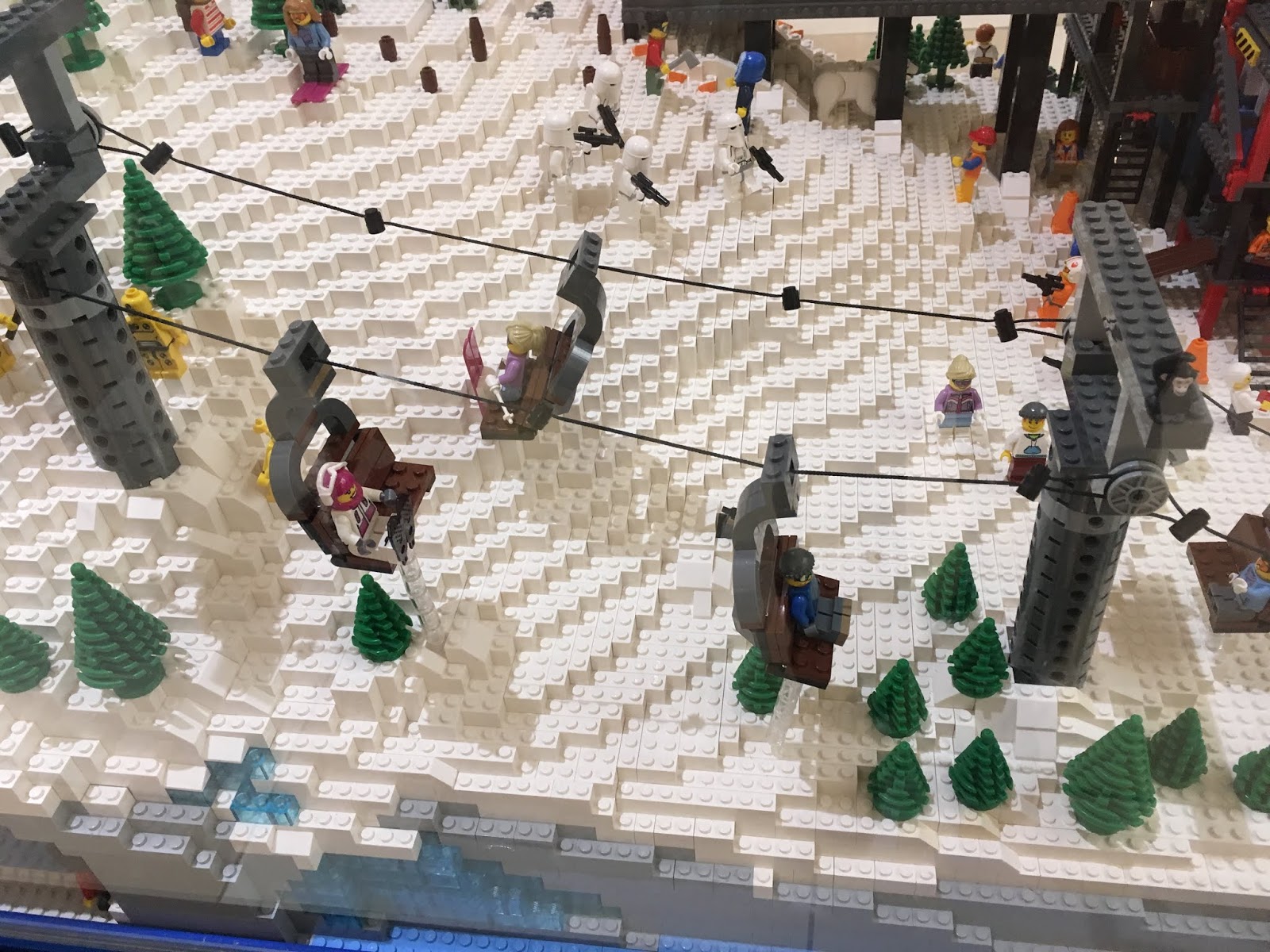
(Lego people on a ski trip...and a battle?)

A few dioramas were displayed in large glass cases.  I liked the winter scene with skiers on a chairlift going up a mountain.  But what were those guys in the background with guns doing??  A group of children and a couple of parents stood by.  One of them said that this was from the Lego Movie.  I moved on.


(Hands-on fun for kids)
In one of the large open areas of the mall, children played and created their own Lego models.  This was a popular spot.  I checked out all the play options.  I particularly liked the racing ramp.  Kids built cars at a nearby table and then ran them down the track.  I saw no sharing problems; everyone appeared to be having a good time.


The federal buildings had been built with mostly light-colored Legos.  Smaller buildings, such as Independence Hall in Philadelphia with its Colonial red brick design and white trim, were a refreshing change.  I admired the detailed window detail, and could imagine piecing together blocks to fit the 18th-century design.

(Independence Hall)

I wondered how many Lego blocks these constructions required.  Next to one model, I came upon a small kiosk where kids could guess the number, write it on a paper, and drop the paper in a slot box.  I wouldn't have the faintest idea how many Lego blocks would be in the Capitol!  I heard one boy say 10,000.  I would guess more.


I loved seeing Boston's Old North Church.  It didn't draw as much attention as the bigger buildings that children would instantly recognize, but those who wanted to check all the boxes would find it.  The sign read that it took three master Lego builders only 200 hours to make this wonderful model with its fine steeple.  Five 40-hour weeks with three people working continuously still sounded like a lot to me.


(Boston's Old North Church)


On another February day, in an entirely different venue, I went to "Cathedral in Bloom," a flower show at the Episcopal Cathedral of All Saints in downtown Albany.  The flower show has been at the State Museum for years.  This year, due to renovations at the museum, the show took place at the Cathedral.

(the sale table is a bounty of color against the gray stone of the Cathedral)
My friend, Karen, an Albany native whose interests are boundless, joined me for this outing. Bright bouquets in pots greeted us as we entered the building. Many of the floral displays were clearly meant to appeal to wedding planners.  We could imagine a bridal couple under an archway made of red roses, or having dinner at tables festooned with white blossoms.  Although we loved seeing the flowers, we had also timed our visit to include a tour of the Cathedral itself.


(Florists perfectly decorated the lovely Baptistery doors)


Many wealthy donors, famous architects, and stone carvers were instrumental in the construction of the cathedral from its beginning in 1884.  The plan was to build this first American Episcopal cathedral in an English Gothic style, paying tribute to its Church of England roots. The original design was grandiose, but today less than half of the cathedral is actually finished.  Much of the remainder is still called "temporary," despite the many large rose windows, delicate stained glass, intricate wood and stone carvings, and an apparent permanence these past 130 years.


(Tiny pipes just a couple of inches high in lower left rise to large wooden pipes in two "attic" chambers on both sides of the choir area)

The eastern end of the cathedral, the choir, is the only fully completed part of the building, thanks to a 1902 influx of cash from J. Pierpont Morgan.  I was drawn to this area, since it is the home to the musical part of the cathedral.  In fact, I have a tradition of coming here at Christmas to hear the Cathedral's renowned Men and Boys Choir.  The choir performs the Nine Lessons and Carols at Christmastime.  With the Anglican pageantry and incense, I feel transported to the famous equivalent of this service at King's College in Cambridge, England.

(The massive organ)
It takes a talented organist to handle the four keyboards, innumerable stops, couplers, foot pedals, and the additional console at the other end of the cathedral!  Two hands and two feet must be active all the time to make music flow through the 4000 pipes.  And three mirrors above the organ let the organist know what is going on around him at all times.  Talk about multi-tasking! 

(Flemish Renaissance carving from 1622)

I was interested to learn that the misericords (seats for clergy who may need a rest during a long service) in the choir loft, were not only imported from Brugges, Belgium, and 400 years old, but were a gift from Spencer Trask, of Yaddo fame in Saratoga Springs.

(a rose swag draping from the pulpit)

Before we left, Karen and I perused the items for sale, sniffed the Harney & Sons specially-made "Cathedral in Bloom" tea, and considered the tins of flower seeds. In the end, I bought a bouquet of yellow tulips to brighten my kitchen on this gray February day. 

Wednesday, January 30, 2019

Bennett Hill: Winter


(Walking alongside this farm is a beautiful introduction to the trails at Bennett Hill.)

In Spring 2017, I promised you that I would follow the seasons at Bennett Hill, a beautiful hiking spot not far from my Albany home. I was inspired by Jackie Donnelly's ongoing in-depth study of her beloved nature spot, Moreau Lake State Park, which she features often in her blog:  https://saratogawoodswaters.blogspot.com.

However, after spring and summer, I had let the idea go, but now I'm back and it's winter!


(Now and then, my snowshoes barely made a dent in the packed wind-blown snow.)

We received 15" of beautiful snow last week.  With heavy rain in the forecast, I was itching to get out in the powder while it lasted.  A perfect sunny cold Tuesday passed me by.  Rain inched closer.  I checked and double-checked the forecast.

On Wednesday, the rain was not supposed to arrive until mid-afternoon.  I gathered up snowshoes and boots and headed out early.  I felt desperate for fresh air and some exertion with beauty on the side.  Bennett Hill was close enough that I hoped to drive there and do the 3-mile loop before sleet and freezing rain made an appearance.


(You mean I have to break my own trail from now on through deep powder?)

The sky was dark.  Freezing rain hit my windshield as I drove the short distance.  Ice creeped in from the edges and I turned on the defrost.  This was not fair!  It was far too early in the day for rain (according to my authority weather underground, wunderground.com). I was glad it stopped as I pulled into the small parking area at Bennett Hill.


(This tree was made for sitting, but I'll just admire it this time.)

Wind had howled around my house the previous night and it apparently had here also.  Amidst the softer snow, hard patches of trail showed where the wind had banked the snow into concrete.  I didn't mind; being able to walk on top of the snow for a short stretch offered an easy, if sporadic, change from the powder.

I passed a woman coming down the trail as I was going up.  We talked about the impending rain and discussed ski tracks visible alongside the snowshoe trail.  Skiing here would take some skill between the trees.


(Can't you imagine an otter sliding down the hill from the left and doing some aerials, as if on a ski jump, as he flies off to the right?)

I kept a steady pace as the trail climbed.  I needed some sturdy exercise.  I worry that, if I turn into a slug during the winter, I won't be able to hike well in the summer, and I want to continue my hiking career for a long time.  Besides, winter is one of two seasons, along with fall, when I feel at my best physically.


(Wind has been the story of our 2018-2019 winter so far, making swirls around the trees.)

Apparently, the hiking gods heard my plea for exercise, because I hadn't snowshoed too far when the tracked trail ended.  Others before me had turned around and gone back. Even the ski tracks vanished into the woods.  My work was cut out for me, for sure.  Breaking trail in deep snow is not easy!

Suddenly, I felt alone and was reminded of all those ranger reports I read where people get hurt and are often not prepared to wait for help in the cold.  This is not a mindset that I usually feed into.  Clearly, I had been reading too many DEC reports and quickly passed off these thoughts!


(All this view needs is Santa and his reindeer crossing the sky at night: "the children were nestled all snug in their beds," "Mamma in her 'kerchief and I in my cap" )

The summit of Bennett Hill is a reward in any season.  I like the way the trail curves around the low vegetation to the view over the hamlet of Clarksville.  In winter, Clarksville looks like a Christmas village below with streets making lines between the white, and rooftops covered in snow.

But...just as I came to the viewpoint, freezing rain pelted my face and pinged on my jacket in defiance of the forecast.  In minutes, it stopped.  I wasn't any the worse for wear, but, really, what's the deal, wunderground?


(This summit birch tree is a favorite of mine.)

I paid more attention to natural elements, taking winter pictures of the places I had photographed for my spring and summer blog posts back in 2017. I enjoyed being the first person, except for woodland animals, to make tracks in this snow.  The summit was a clean white landscape, without the needles blown by the wind littering the landscape as they had farther down the hill.


(So many small fungi decorate this tree trunk.)

I had seen deer tracks criss-crossing the snow all the way up, and then I came across this deer bed.   I was tempted to put my hand on the earth to see if it were still warm, since it looked like the deer had recently left, but I knew that in today's temperature, the ground would only have stayed warm for a few seconds. I walked on.


(A perfect deer bed -- recently vacated?)

When I first set out today, I had seen numerous dog tracks on the lower trail.  Those tracks came from hikers' best friends who had been here before me.  But now, higher up where no one had broken the pristine snow with human footprints, I knew that these dog-like tracks belonged to a coyote.  A clue is the way that coyotes put their back paws in the tracks of the front paws, one foot stepping where the other had been. This coyote had been traveling at a relaxed trot.


(Out for a stroll, or hoping for a hunt?)

And what about this mound?  The attractive-meditation-shrine-turned-messy-rock-cairn had to be underneath the smooth white covering.  Perhaps buried stones and sticks provided a cozy winter hibernation nest for someone small. 

(Burial mound for a rock cairn)

And what was that? Blue sky?  Feeble shadows came and went across the forest floor as the sun struggled to break through the dark clouds...until it won with a splash of blue.


(A fabulous surprise!)
Shadows acquired a sharp definition and deepened in contrast to the now bright white.  As I began the descent from Bennett Hill's plateau, my scene changed entirely.


(Sun offers a whole new dimension to the trail.)

I knew I was getting hungry when I saw this log in the woods and was reminded of a roll of cake with white buttercream frosting.  I began to think about what I would have as a snack on my way home.  A tiny grocery would be a nearby shopping option.  My longtime favorite lunch of an apple and cheese awaited me at home, but I longed for something sweeter.

(Twinkie?)

How different the farm scene looked in the sun compared to it's dark appearance when I had arrived.  But even as the sun glistened in the foreground, the sky and hills beyond grew dark.  I was glad I was almost to the car.  I had had enough brushes with freezing rain and preferred to carry the burst of blue sky and sunshine home with me.


(Two moods on the farm.)

It had taken me two hours to hike Bennett Hill, longer than usual.  Breaking trail in deep powder had slowed me down, but I felt good.  I had breathed deep and worked hard. 


The car seemed drawn to snack options on my way home.  I prefer ice cream sandwiches made with two chocolate chip cookies and vanilla ice cream, which I didn't find in the case today, but I bought the next best thing and it tasted pretty good.  That apple and cheese wouldn't be too bad when I got home, either.
---------------------------
Here are links to my Spring and Summer 2017 blog posts about Bennett Hill:
https://nooksandvales.blogspot.com/2017/04/bennett-hill-spring.html
https://nooksandvales.blogspot.com/2017/08/bennett-hill-summer.html

Saturday, November 24, 2018

Diary of the Great War


(Lauriston Berdan Goetschius, 1918)

I have been prompted by this year's interest in World War I to share a portion of my grandfather's war diary with you.  In April 2012, I gave a presentation on the diary to a French class at The College of St. Rose.  At that time, I borrowed the diary from my mother and photographed many of its pages and memorabilia, which are the basis for this post.


(Journal de Grand Guerre [sic] 1918)

My grandfather, Lauriston Goetschius, spent most of his youth on a farm in the western Catskill hamlet of Downsville.  Lauriston's father was a noted historian, who named his son after Jacques Alexandre Bernard Law, marquis de Lauriston, a general in the Napoleonic Wars.  Brought up with a sense of history and patriotism, my grandfather volunteered to join the army as his honorable duty.  Serving his country during The Great War was for him and for many, a coming-of-age experience.

Laul, as Lauriston's family called him, left Camp Dix, where he was trained, and sailed for France out of New York Harbor on May 27, 1918, at the age of 22.


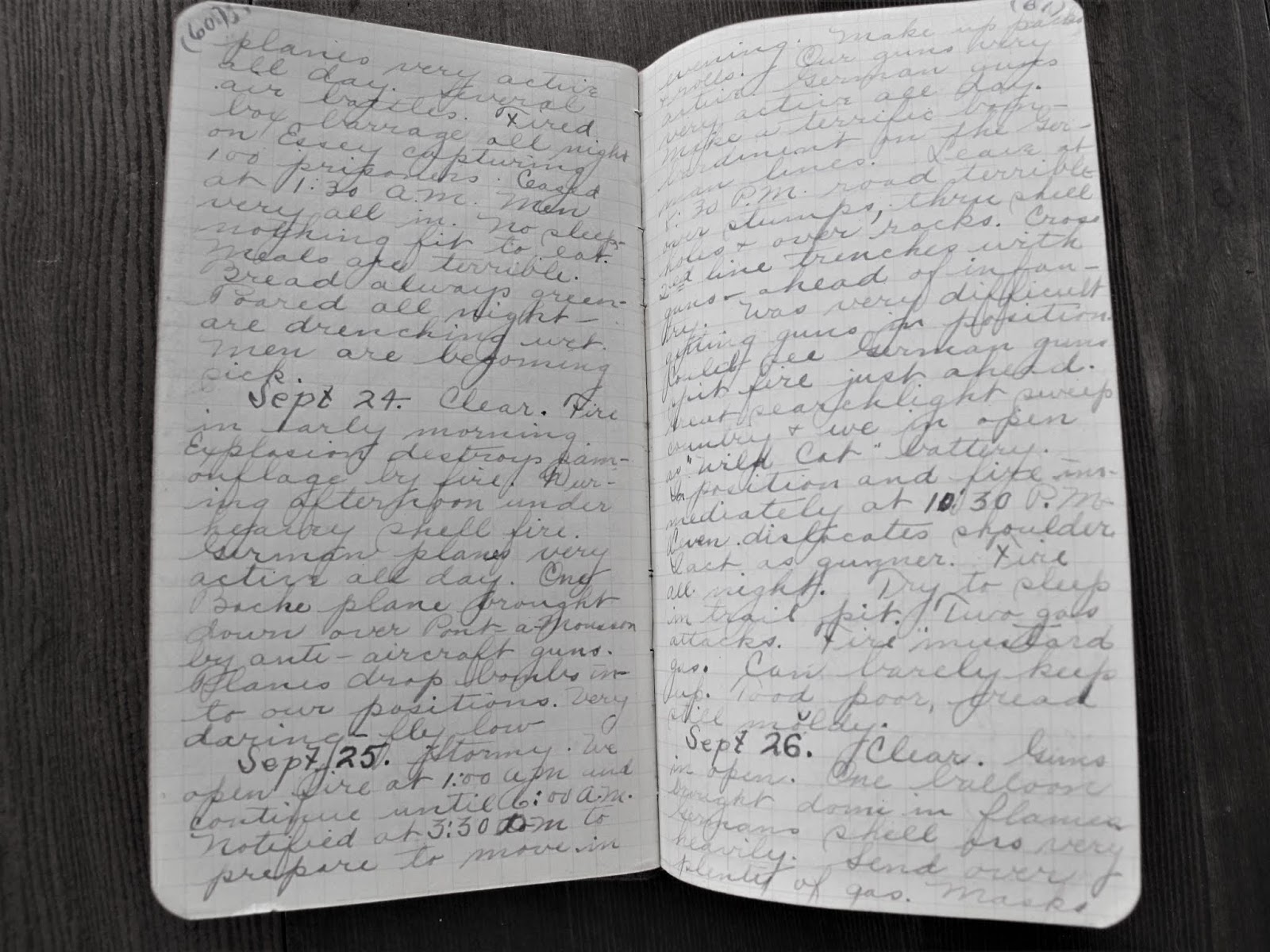
(Despite harsh conditions, Laul's beautiful penmanship prevailed)

Writing a war diary was not an unusual practice during World War I.  Not only did soldiers write, but they wrote with the idea that their diaries might be read by others, perhaps even future generations.  We certainly feel this when reading Laul's diary.  His writing is sometimes poetic or grandiose by our standards.  Thanks to Laul's artistic ability, his diary is sprinkled with drawings as well.  I have chosen to share entries with you that I think are particularly interesting or descriptive.


(The formidable cootie)

By the time summer arrived in France, Laul's nostalgia for his native farm country becomes evident.

"August 7, 1918 --  A beautiful summer morning out on a reconnaissance march up the valley.  Everywhere there was the smell of newly cut grain and smell of buckwheat and a humming of the honey bee. "

Laul's job was to take care of the horses in the cavalry.

"August 23 -- Formation, stables, foot drill, clean pistols.  Women come around and peddle nuts and plums. Men go to the Moselle River for bath in the p.m.  Half of men have cooties.  Bury horses.  Extremely poor food and scant.  French children beg for food at mess."

When I read these passages to St. Rose students, I had to define words like "mess," and later, "drive."  To my surprise, they also needed me to tell them what "cooties" were.


(Detailed drawings of various cemetery crosses)

September brought the horrors of war.  Here are excerpts from September 3 and 16.

"Stormy.  All night changing position of guns.  Germans shelling us.  Hear them whistling and singing just over our head and crashing through the trees just behind, and throwing dirt and wood for hundreds of yards.  No loss in men, however.

Advanced into territory occupied by Germans previous to drive.  Very bad odor of dead Germans and horses.  Forts completely torn down, nothing but stubs left.  Shells holes every two feet and dugouts torn to pieces."

The writing, which seems somewhat detached, forces us to use our imaginations to conjure up pictures of soldiers in trenches or trudging through gruesome scenes.


(Mama and Papa)

In this excerpt from September 17, we move from discomfort, to the beauty of the countryside, and finally to horror and back to general discomfort -- a fascinating juxtaposition that offers a glimpse into the turmoil Laul may have been feeling.

"Pick cooties off undershirt and drawers.  Meals terrible.  Wonderful view from here over the Lorraine country and the beautiful Moselle valley.  Very fertile valley.  Beautiful cathedral.  City partially destroyed by shelling every hour of the day.  Old stone bridge across Moselle destroyed.  Hills much like Catskills.  French fort to east of city, also statue of Joan of Arc.  Ran across a dead German in the wire entanglement.  Have not had dry feet for two weeks and no water to wash in for more than that long."


(Laul loved children; here are three of his nieces with strands of baby hair taped to the page)

By October, Laul was getting sick and times were harsh.

"October 5 -- Sergeant Crowe of my gun killed. A great loss.  Men demoralized over it.  I helped take off his personal property.  Roads full of dead men and horses, torn wagons and caissons.  Have a heavy cold and dysentery very bad.  Shed my clothes and slaughtered cooties--big catch.  We are nearly exhausted.  We lay down in muddy roads where we stopped to sleep."


(The diary has a back pocket with money and mementos)

Illness hit hard by October 17 and Laul lets us know how he feels.

"I got up but could not stand on my legs.  Had been up every 15 minutes all night with dysentery.  Had to lie down.  Boys wrapped me in blankets.  Sergeant found me in this condition and gave me hell and told me I must work since I hadn't sense to go on sick report.  Doctor comes and marks me "influenza" and to be evacuated, against my wishes.  Major tells me if I stay another night I will contract pneumonia.  Leave by ambulance at 7 p.m.  Red Cross right on job with hot chocolate, crackers, cigarettes, and chewing gum.  On American R&R and nearly dead.  Spirits low and disappointed.  Think of home."

Influenza was especially frightening at this time during the pandemic of 1918.


(French francs)

Finding and re-joining his unit after his convalesence proved difficult.  How communication and travel has changed in 100 years!  Laul was with soldiers of a different unit on November 11.  His writing becomes flowery as he describes the dramatic historical moments taking place, evoking the strong possibility that others might read what he wrote.

"At 4 p.m. the news of the armistice signing arrived. Hostilities ceased at 11 a.m. and once more the world is at peace though thousands of boys were at rest and peace on the battle fields months ago.  The camp and town were in a wild uproar.  I went into town.  One old man cried with joy.  Noise kept up way into the night. The war is over.  How queer it all seems to me to picture the front no more with the roar of incessant gunfire or aeroplane motors or the spatter of hundreds of machine gun bullets in the mud like a heavy hailstorm.  Two things remain and remain always, the lonely soldier graves and the scars of battle on the fields and hills of Europe and on the hearts of every mother, father, sister, brother, wife or sweetheart who has sacrificed all that God can require of them, a heart and soul on the battlefield.  God be with them all, and a curse on every German who is directly responsible for the sacrifices of this war."

(a photo, pressed flowers and leaves)

Months plodded on after the armistice, but, on New Year's Eve, Laul writes:

"Last day of the year.  Drilled all morning.  Took cross-country walk in the afternoon.  At night we built a great fire in the fireplace which was roaring all night.  Conway and I sent the old year out playing chess.  Had great time as the new year came in.  Much wine, everyone happy.  Sang songs and raised the deuce in general.  All men formed a circle and drank a cup of wine to the health of all our people home, and the hopes of seeing them and God's Country in the very near future.  And so the year of 1918 passes behind us a year of history all the world will carry as long as this old globe continues to travel about the sun making its years of wars and peace.  A year which has left sorrow and then peace in all the hearts of everyone.  Now America bring us home."


(Armistice Day)

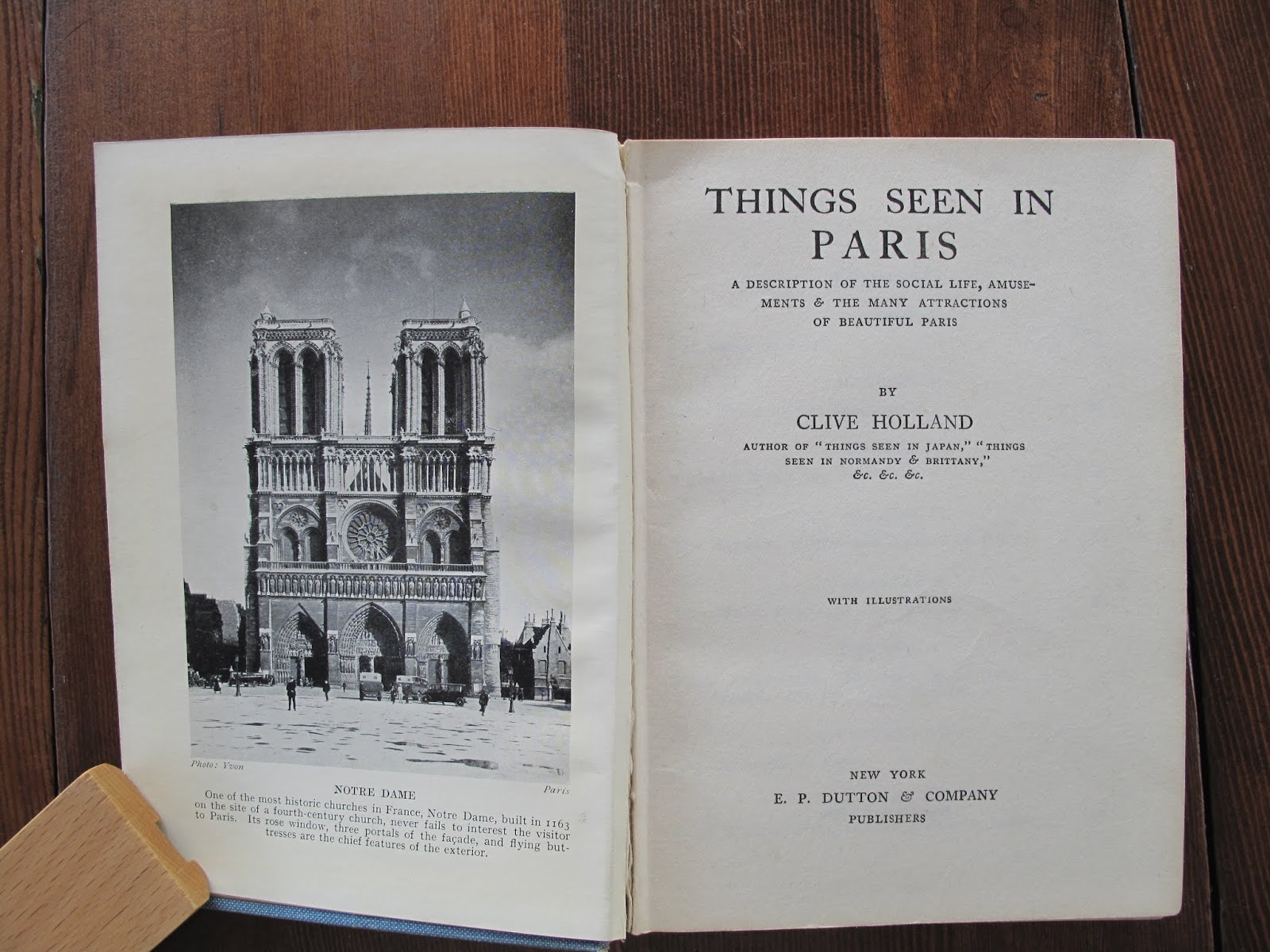
The diary continues with notes about drills, bad food, cold, homesickness, and horses.  Laul did not arrive in New York until May 14, 1919.  During those post-war months in France, he did have three days of of leave and went to Paris.

When I was a child, my grandfather told stories about his fellow soldiers and the pranks they pulled.  The horrors were left to his diary.  However, for the rest of his long life of 97 years, my grandfather suffered from a mustard gas burn behind his shoulder.  My grandmother rubbed cream on it.  After she died, he fashioned a tool to spread the cream himself, reaching awkwardly behind him to find the spot.  When we visited, he always asked us to do this for him. 

(Hand-drawn map of path across the Atlantic home to New York with days drawn on longitudinal lines, April 27 - May 14, 1919.)


The St. Rose students had lots of questions about the war experience which I enjoyed answering. They also wanted to hear about my grandfather's life after the war.  In 1921, he married my grandmother and and raised a family of two girls in northern New Jersey, where he was an insurance salesman.  During the depression, when he lost his job, he used his creative talents to make wooden toys which he sold to FAO Schwarz in New York City from 1936 through 1970.  My sister and I still have some of these toys today. The St. Rose students thought that I was very lucky to have had a toy maker for a grandfather!  I assured them that I was indeed.


(letter from General Pershing thanking soldiers for their service)

After I had answered all of the questions, the professor spent the rest of the class time on World War I.  She projected a map of France on a large screen and showed the students where my grandfather had been.  She also showed them pictures of trenches, missiles, and grave markers.

The professor's grandfather had been a mail carrier on a bicycle for the Canadian Army in Belgium during the war.  On the screen, she displayed pictures of Flanders Fields with its poppies and read the famous poem, "In Flanders Fields," by John McCrae.  At The College of St. Rose, students receive poppies on Veteran's Day.  They were fascinated to learn how the tradition came about.


(A news article stipulating the terms of the armistice)

The professor told me later, "The students need to understand how important the Twentieth century was." 


(The book my grandfather bought during his three days in Paris)